

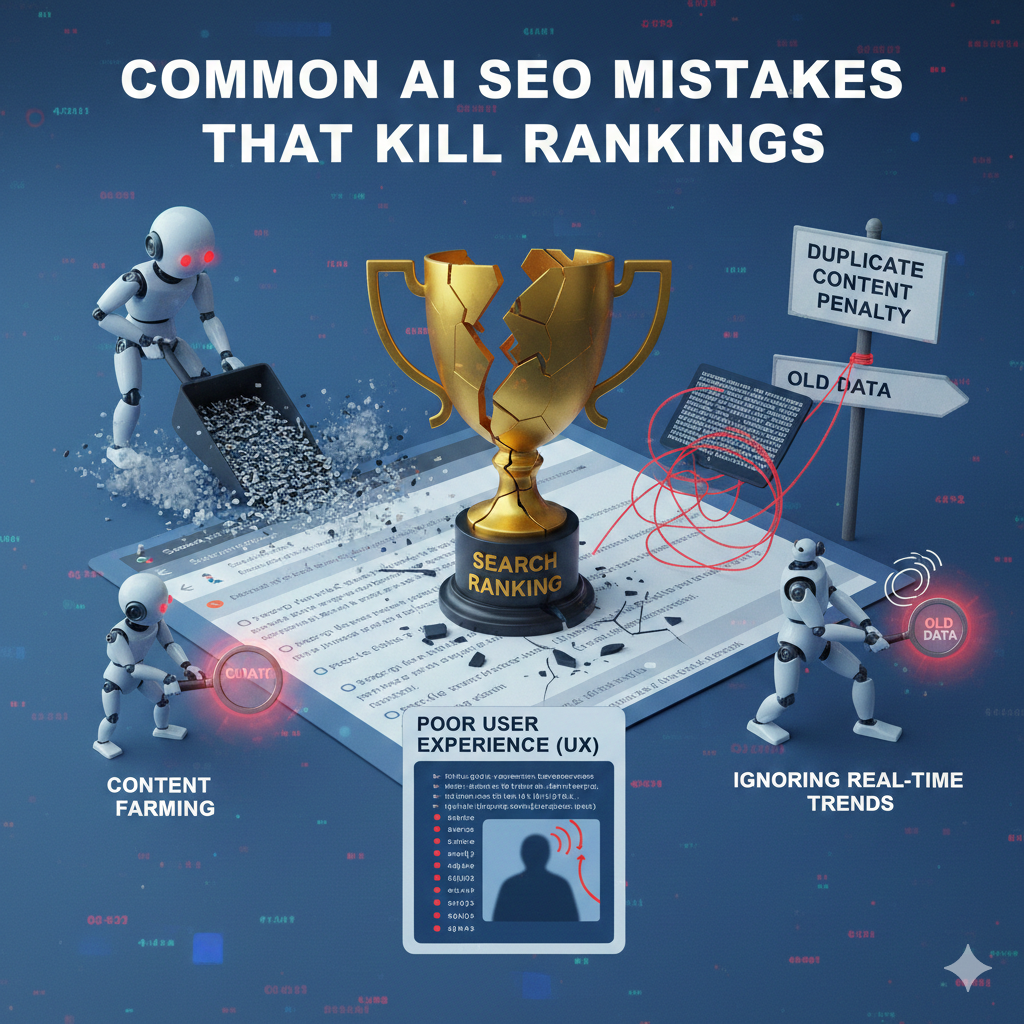
AI has made search engine optimization faster, inexpensive, and extra scalable, however wrong utilization regularly destroys ratings as opposed to enhancing them. Many web sites rely on AI-generated techniques without knowledge of how search engines like google and yahoo examine quality, cause, and value. This long-format guide explains the maximum adverse Common AI SEO mistakes and a way to restore them without sacrificing boom. When used efficiently, AI supports SEO performance, but while misused, it silently pushes your website out of search outcomes.
Ignoring Search Intent While Using AI Content
One of the largest AI SEO mistakes is creating content without mapping search intent. AI equipment can generate key-word-targeted content material, however they no longer automatically understand whether or not a consumer wishes information, contrast, or an answer. When motive is mismatched, users go away quickly, increasing jump prices and lowering engagement signals.
Search engines prioritize purpose satisfaction over keyword presence. If your AI-generated blog does no longer solution the exact question a consumer has, scores drop although the content material is grammatically best. This problem is generally visible on web sites suffering from the lead era notwithstanding first rate visitors.
Common reason-associated mistakes encompass:
- Writing academic content for key phrases that truely show buying cause, which frustrates customers.
- Targeting high-volume keywords without knowledge funnel stage or consumer mindset.
- Creating a couple of AI pages across the same purpose, leading to key-word cannibalization.
Overusing AI Keywords and Semantic Variations
AI search engine optimization gear regularly recommend big keyword lists, encouraging over-optimization. When these keywords are compelled into headings, paragraphs, and meta statistics, content will become unnatural. Modern algorithms easily hit upon this conduct and decrease ratings.
Google now evaluates topical depth, semantic relevance, and clarity rather than keyword density. Websites that depend heavily on AI keyword insertion regularly lose visibility after middle updates, even though the content seems optimized on the surface.
Over-optimization commonly occurs while:
- Primary key phrases are repeated unnaturally across multiple headings.
- Semantic keywords are added without contextual relevance.
- Content is written for algorithms as opposed to real users.
Publishing AI Content Without Human Editing
AI-generated content material lacks real enjoyment, authentic perception, and contextual accuracy. Publishing it immediately without human refinement weakens authority and believe. Search engines more and more reward Experience, Expertise, Authority, and Trust, which AI by myself cannot show.
Human modifying provides clarity, examples, and sensible perception that AI misses. This distinction becomes clear when evaluating merely automatic content with pages that integrate AI performance and human judgment, mainly in competitive niches.
Why human modifying is crucial:
- AI may additionally include old or wrong statistics.
- Tone often feels accepted and brand-neutral.
- Content lacks originality and professional attitude.
Weak Internal Linking in AI-Generated Content
Many AI-written blogs are posted without a right inner linking approach. When content material is isolated, search engines conflict to recognize topical relationships and web page significance. This reduces move slowly performance and authority distribution.
Weak Internal Linking in AI-Generated Content
Strategic inner hyperlinks help customers and bots navigate related subjects, along with connecting AI search engine optimization discussions with publications on AI search engine marketing gear that truly enhance Google rankings or common AI advertising mistakes. Without this structure, even strong content material underperforms.
Internal linking errors include:
- Not linking AI blogs to relevant cornerstone pages.
- Using frequent anchor text in preference to descriptive keywords.
- Creating content material silos without contextual connections.
Scaling AI Content Without Quality Control
Publishing big volumes of AI content material may boom page count, however it often triggers fine suppression. Search engines actively filter out sites that produce repetitive, low-cost content material at scale. Quantity without price leads to lengthy-time period ranking loss.
Helpful Content systems reward originality, intensity, and usability. Websites that scale AI content material effectively always integrate automation with strict editorial standards and performance monitoring.
Quality issues appear while:
- Multiple pages observe the same AI-generated structure.
- Content adds no new insights or examples.
- Underperforming pages are by no means up to date or removed.
Blindly Following AI Technical search engine marketing Suggestions
AI tools frequently offer technical search engine optimization hints, but enforcing them blindly can harm site health. Technical SEO choices require trying out, platform information, and expertise of site architecture.
Incorrect schema markup, incorrect canonical tags, or computerized redirects can block indexing and damage rankings. These errors regularly impact performance metrics mentioned in Core Web Vitals optimization publications.
Risky technical search engine optimization mistakes encompass:
- Applying schema without checking eligibility.
- Changing URLs without a redirect strategy.
- Ignoring web page velocity and format stability problems.
Losing Brand Voice and Content Originality
AI content frequently sounds identical across websites. Without logo voice customization, content material lacks differentiation and fails to build accept as true with. Search engines reward particular perspectives and original framing.
Strong branding improves engagement metrics consisting of time on page and go back visits. Generic AI content struggles to attain these signals, in particular in aggressive SEO niches.
Brand dilution occurs when:
- AI writes without defined tone or target audience persona.
- Content lacks reviews or actual-international examples.
- Every article follows the equal AI template.
Disconnecting AI SEO From Business Goals
Ranking on my own does now not assure achievement. Many AI-pushed search engine marketing techniques cognizance only on traffic at the same time as ignoring conversions. Pages that rank however do now not manual customers towards action deliver little commercial enterprise value.
search engine optimization must help lead technology, sales, or emblem growth. This trouble is often mentioned in analyses of why websites fail to transform traffic into leads.
Goal misalignment occurs while:
- Content has no clean CTA or funnel direction.
- Keywords are unrelated to services or products.
- Performance monitoring is disregarded.
Not Updating AI Content Over Time
AI-generated content becomes old quickly, specifically in fast-moving industries like virtual advertising and marketing and technology. Search engines desire freshness, accuracy, and relevance.
Regular updates assist hold scores and authority. Websites that refresh AI content consistently outperform people who put up and overlook.
Content decay happens while:
- Blogs are by no means reviewed after publishing.
- New information and examples aren’t delivered.
- Algorithm modifications are left out.
Treating AI as a Replacement Instead of a Tool
The maximum adverse mistake is treating AI as a complete substitute for search engine marketing expertise. AI is a productiveness device, not a strategist. Without human oversight, AI-driven search engine marketing lacks route and accountability.
Successful SEO combines AI pace with human creativity and decision-making. This stability is honestly defined whilst comparing AI vs human marketing procedures in cutting-edge techniques.
Conclusion
AI can boost search engine optimization increase, however handiest while used with area and approach. Avoiding those mistakes helps guard rankings, enhance agree with, and force sustainable results. AI works first-rate while guided through human know-how.
FAQs
Does Google penalize AI-generated content material?
Google penalizes low-pleasant and unhelpful content material, not AI itself. Quality and usefulness rely most.
Can AI-written content material rank on Google?
Yes, AI content can rank when it meets rationale, high-quality, and agree with requirements.
How a good deal AI content is safe for search engine optimization?
There is no restriction, but fine control is critical.
Should AI replace search engine marketing professionals?
No, AI need to assist SEO professionals, not replace them.
















.png)